
Wilder Auto Body is publishing new consumer guidance focused on the final vehicle inspection that follows collision repair. The October resource explains what vehicle owners can expect at the end of the repair process, with emphasis on reviewing the completed vehicle against the documented work before delivery.
The publication expands on Wilder Auto Body’s collision repair information by concentrating on four areas that can be relevant during a final review: exterior fit and finish, components and functions associated with the repaired area, applicable electronic procedures, and documentation of completed repair operations.
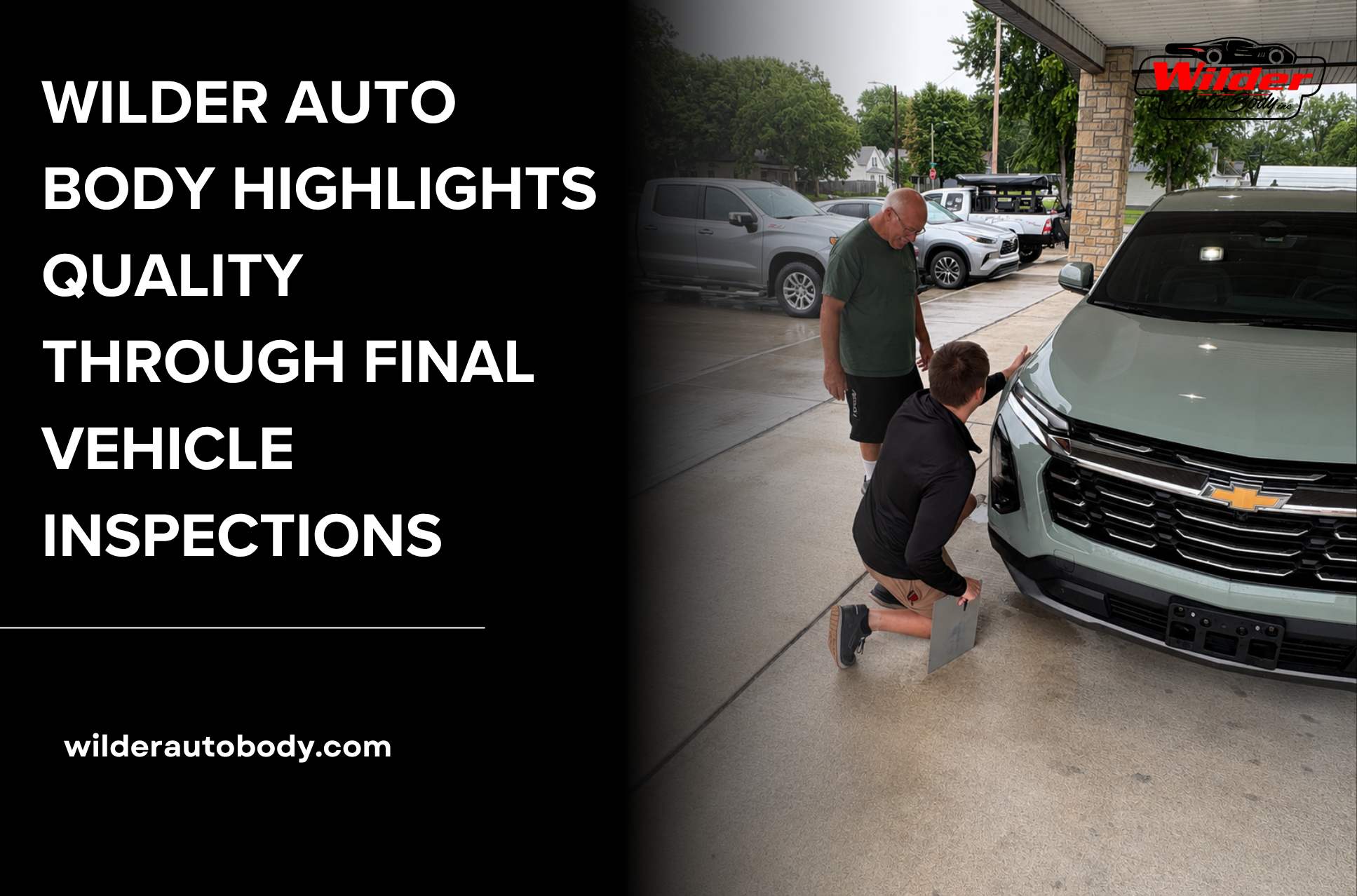
Collision repair can involve several stages before a vehicle reaches final inspection. Depending on the damage and repair plan, work may include disassembly, body or structural repair, component replacement, refinishing, reassembly, diagnostics, and calibration. The October guidance explains how final inspection provides a concluding review after those applicable operations have been completed.
Exterior fit and finish are among the most visible parts of that review. Components affected by the collision can be examined in relation to adjoining parts for fit, attachment, and position. Refinished areas can also be reviewed in relation to adjacent surfaces and the work performed.
The publication emphasizes that the inspection should correspond with the individual repair rather than rely on one universal checklist. The areas reviewed depend on which components were damaged, removed, repaired, replaced, refinished, or reinstalled.
Relevant vehicle functions may also be included.
A collision repair can involve components that serve both physical and functional roles. If the work involved a door, for example, the completed repair may include applicable checks related to opening and closing, latching, glass movement, handles, locks, mirrors, or trim. Other repaired areas can involve lamps, exterior components, wiring, or related equipment.
The specific functions reviewed depend on what was involved in the documented repair. This keeps the final inspection connected to the actual collision damage rather than turning it into a general inspection of unrelated vehicle systems.
The October publication also addresses a less visible part of modern collision repair: electronic procedures.
Cameras, radar units, sensors, wiring, and electronic modules can be positioned within or near collision-affected areas. Depending on the vehicle and work performed, diagnostic scanning or calibration may become part of the repair plan.
Wilder Auto Body provides additional information through its ADAS calibration services. The company’s guidance notes that calibration requirements depend on the vehicle configuration, affected components, repair operations, and applicable manufacturer procedures. Calibration is not presented as an automatic requirement following every collision.
When diagnostic or calibration procedures are required for the individual repair, their completion can be included among the documented operations considered before delivery.
This is significant for consumers because some completed repair work is no longer visible once the vehicle has been reassembled. Depending on the repair, structural measurements, corrosion protection, attachment methods, diagnostics, or calibration may have been completed during earlier stages even though the finished exterior does not display those operations.
Documentation therefore provides additional context for the final review. The completed vehicle allows accessible repaired areas and relevant functions to be examined after reassembly, while the repair plan records operations performed during earlier stages.
Vehicle-specific repair requirements can also remain relevant through completion.
Automakers use different materials, joining methods, electronic systems, and component designs. Wilder Auto Body’s OEM repair information provides additional information about the role manufacturer procedures can play during collision repair. Depending on the vehicle, those procedures can address areas including component replacement, attachment methods, corrosion protection, diagnostics, and calibration.
The October guidance also defines the scope of the final inspection. It is connected to the collision damage and repair work performed rather than serving as an unlimited evaluation of every mechanical or cosmetic condition on the vehicle.
That distinction gives consumers a practical way to understand the process. The final review can return attention to concerns documented at the beginning of the repair and confirm applicable areas again after the vehicle has been reassembled.
For example, if an initial evaluation identified a displaced bumper, damaged lamp, and dented fender, the repair plan establishes the operations associated with those components. Earlier checks can address work while components remain accessible, while the final inspection reviews the completed exterior, relevant installation, and associated functions after reassembly.
The October resource also highlights communication at vehicle delivery. Some collision repair operations are difficult for owners to recognize visually once the vehicle is complete. Explaining the major areas repaired and relevant procedures performed can help connect the finished vehicle with work documented during the repair.
The new guidance ultimately gives consumers a concise framework for understanding final inspection: compare the completed vehicle with the documented repair, review the repaired areas and relevant functions, confirm applicable procedures have been completed, and provide context for important work that may no longer be visible after reassembly.
Wilder Auto Body’s source material describes final inspection as the concluding stage of a process that begins with damage analysis and repair planning. In-process checks address work when particular areas remain accessible, while the final review provides an opportunity to examine the completed vehicle before delivery.
Wilder Auto Body provides collision and auto body repair services from its facility at 138 E Crawford St, Clay Center, KS 67432. The October consumer guidance focuses on helping vehicle owners understand what the final inspection contributes to the completion of a documented collision repair.
###
For more information about Wilder Auto Body Inc, contact the company here:
Wilder Auto Body Inc
Kyle Wilder
(785) 632-3484
office@wilderautobody.com
138 E Crawford St, Clay Center, KS 67432
